 FOOD Magazine L'alimentaire à la loupe








The transformation of the European regulatory framework in the agri-food sector is reshaping the conditions for access to the European market and redefining the standards of competitiveness.
The MOROCCO FOODEX Morocco Sustain Food® sustainability standard is a key initiative aimed at integrating these principles of sustainability and social and environmental responsibility into the economic practices of Moroccan export companies in the agri-food sector.
Carbon neutrality, full traceability, reduction of chemical inputs, social responsibility: the new European standards are profoundly redefining the conditions for access to the European Union’s agri-food market. For a country like Morocco, where more than two-thirds of agri-food exports are destined for the EU, this regulatory change represents a strategic turning point.
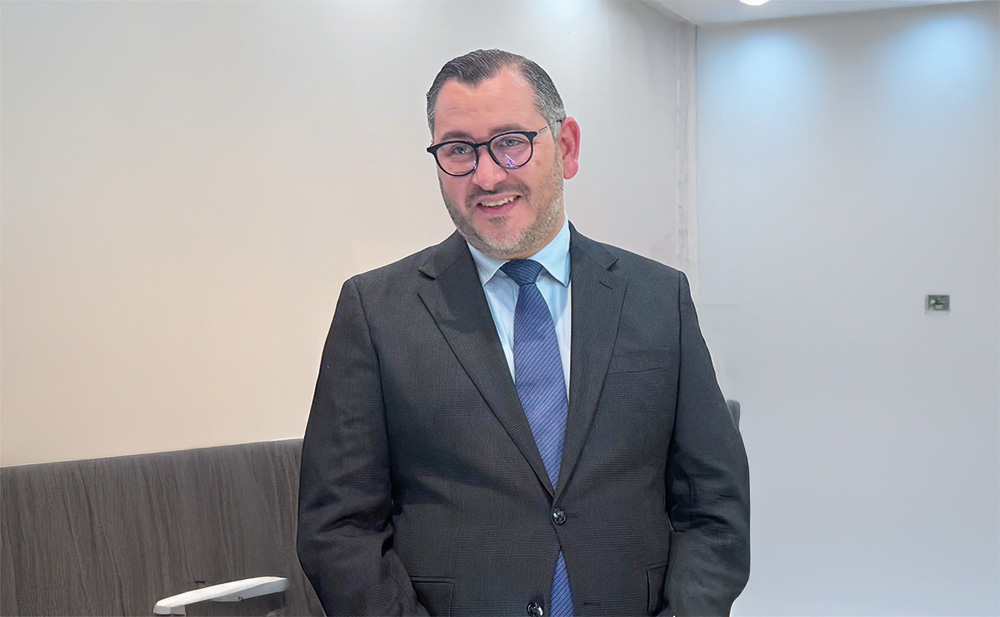
Mr. El Alami, Director of Promotion and Development at Morocco Foodex , explains the concrete impacts of these new constraints for Moroccan exporters, the support measures implemented, notably through the Morocco Sustain Food® sustainability standard, and the opportunities for differentiation to consolidate Morocco’s competitiveness in European markets by 2030.
With the gradual entry into force of the Green Deal and an increasingly demanding regulatory arsenal, how do you perceive the transformation of the European framework for agri-food exports today, and what priority issues does this raise for Moroccan operators?
The transformation of the European framework for agri-food imports is a profound and structural change for the EU’s trading partners, including Morocco. This evolution goes far beyond a simple technical or regulatory adjustment: it redraws the conditions for access to the European market and redefines the standards of competitiveness.
The Green Deal aims to make the EU the first carbon-neutral continent by 2050, with a particular focus on environmental sustainability, food safety, and traceability.
This requires Moroccan exporters to make significant changes to their agricultural practices in order to meet the new European standards, which emphasize environmental sustainability, food safety, product quality, and traceability throughout the value chain. To remain competitive and maintain their access to the European market, operators must integrate more environmentally friendly production methods, limit the use of chemical inputs, strengthen quality control systems, and ensure total transparency regarding the origin and production conditions of exported goods.
By 2030, do you think these European standards could become a lever for upgrading the Moroccan agri-food offer, or, on the contrary, a selection factor that could exclude certain players?
By 2030, European standards could play a dual role for Moroccan agri-food products : they could represent an opportunity for upmarket products for those players capable of adapting, and constitute a factor of exclusion for those who are unable to keep pace with the required transformation.
This will lead to two scenarios for the Moroccan agri-food sector:
1. An opportunity for high-performing companies that are able to comply with these standards by investing in quality, technology, traceability, and sustainable agriculture. By meeting these requirements, they will not only be able to access or maintain their presence in the European market, but also position themselves as trusted, high-value-added suppliers.
2. A risk of exclusion for small producers or companies that do not have the technical, financial, or organizational means to adapt to these standards. They risk losing access to the European market not because of a lack of quality, but because of an inability to meet administrative, technical, or environmental requirements.
The European Union now imposes a logic of sustainability from the very origin of products. What efforts are being made to green Moroccan value chains, particularly in agricultural and fisheries practices?
Morocco is actively engaged in the sustainable transition of its agricultural and fisheries value chains by gradually aligning them with the strict standards imposed by the European Union. This approach is based on several complementary areas: the modernization of agricultural and fishing practices through the adoption of innovative technologies and environmentally friendly methods, social inclusion, particularly through support for small producers and cooperatives, and the strengthening of a close partnership with the European Union. These efforts are an essential strategic lever for ensuring the sustainability and competitiveness of Moroccan industries on European markets by 2030, while contributing to the preservation of natural resources and the country’s socio-economic development.
How does Morocco Foodex provide concrete support to operators in anticipating and responding to these new, often complex and evolving obligations?
Morocco Foodex supports Moroccan operators in anticipating and responding effectively to new European obligations, thereby strengthening their competitiveness on international markets. This support includes awareness-raising missions designed to inform stakeholders in the sector about changes in European agri-food standards.
This support began with the organization of information and awareness-raising caravans across several regions of Morocco, aimed at promoting understanding of the new requirements, particularly around the development of the MOROCCO FOODEX sustainability label. This support took the form of information and awareness-raising caravans in several regions of Morocco, in order to give operators a better understanding of the new European requirements. These actions made it possible to present the Morocco Foodex (MFX) sustainability label, designed specifically to help Moroccan exporters upgrade to European standards in terms of the environment, traceability, quality, and social responsibility. By structuring practices according to a framework aligned with European market expectations, this label aims to strengthen sustainable and competitive access for Moroccan products to export markets. The institution also organized thematic webinars and a day dedicated to the European Green Deal, accompanied by workshops in Agadir, Marrakech, and elsewhere. These events brought together international experts and representatives of international experts to discuss the impact of new regulations affecting Moroccan agri-food and maritime products.
Does the launch of the Morocco Sustain Food® standard mark a desire for regulatory autonomy? How can this standard both reassure European buyers and simplify the lives of Moroccan exporters?
The MOROCCO FOODEX Morocco Sustain Food® sustainability standard is a key initiative aimed at integrating the principles of sustainability and social and environmental responsibility into the economic practices of Moroccan export companies in the agri-food sector. It is based on a rigorous and structured approach, defining a certification standard based on three fundamental pillars:
• Premium quality: Guaranteeing products that meet international standards for health safety and traceability;
• Reduced environmental impact: Encouraging responsible agricultural and industrial practices, minimizing the ecological footprint and promoting the preservation of natural resources;
• Social commitment: Promoting fair working conditions, respect for workers’ rights, and an inclusive approach to sustainable development.
This standard aligns with international market requirements and new European Union directives and regulations, establishing a certification framework that makes it easier for Moroccan companies to access demanding markets and meet buyer and consumer expectations for sustainability.
What feedback did you receive from Moroccan companies following the Marrakech workshop? What obstacles or opportunities did this regulatory shift highlight?
The Marrakesh workshop, organized by Morocco Foodex, provided very informative feedback from Moroccan companies, particularly those active in agri-food exports. Overall, participants welcomed the initiative, which provided a better understanding of the new European requirements in terms of sustainability, traceability, and regulatory compliance.
Key takeaways from the workshop :
• Growing awareness among Moroccan companies of the challenges related to sustainability and European compliance.
• Willingness to adapt, particularly among exporters, in order to remain competitive in European markets.
• Identified obstacles : lack of access to technical information, high compliance costs, and complexity of traceability requirements.
• Perceived opportunities : moving upmarket, promoting sustainable products, and strengthening dialogue with institutions.
• Needs expressed : enhanced support, appropriate tools, and targeted training, particularly for SMEs.
How do you assess the maturity of Morocco’s exportable supply in light of new European requirements in terms of the environment, health, and social sustainability?
In recent years, Morocco’s exportable offering has made remarkable progress, particularly in structured sectors and among major exporters. Its level of maturity in terms of new European requirements in the areas of the environment, health, and social sustainability gradually improving. Nevertheless, broader adaptation is needed, through :
• Better technical and financial support for SMEs,
• The widespread adoption of environmental and social certifications,
• Anticipation of new European regulations,
• Efforts in training, traceability, and transparency.
Faced with increased competition (Latin America, the Mediterranean basin, etc.), what do you think are the differentiating factors of Morocco’s offering that will enable it to consolidate or expand its export market share?
Morocco faces increasingly strong competition in the agri-food markets, particularly from Latin American countries (Chile, Peru, Brazil) and the Mediterranean basin (Spain, Egypt, Turkey). However, our country has several differentiating assets to consolidate and expand its export market share.
These strategic levers include:
– Geographical and logistical proximity to Europe,
– Gradual alignment with European sustainability standards,
– Complementary climate diversity and seasonality.
Thus, Morocco may not be able to compete on volume like some of its competitors, but it can establish itself as a reliable, ethical, and high-quality supplier for demanding European markets.
Career
A seasoned marketing and development professional, El Mehdi El Alami has been Director of Promotion and Development at Morocco Foodex since 2019, where he works to promote Moroccan agri-food exports. He previously headed the commercial division of SONACOS, marketing for the Éléphant Vert Group, and the AgrInnov Cluster.
After working at Brasseries du Maroc and D&M Telecom, he began his career in France at BNP Paribas and Teradata. A graduate of ESG Paris and Panthéon-Assas University, he is part of a generation of Moroccan executives trained internationally and committed to the Kingdom’s agricultural competitiveness.